How Smart Collars Are Revolutionizing Pet Care in 2026
Updated for 2026
How Smart Collars Are Revolutionizing Pet Care in 2026
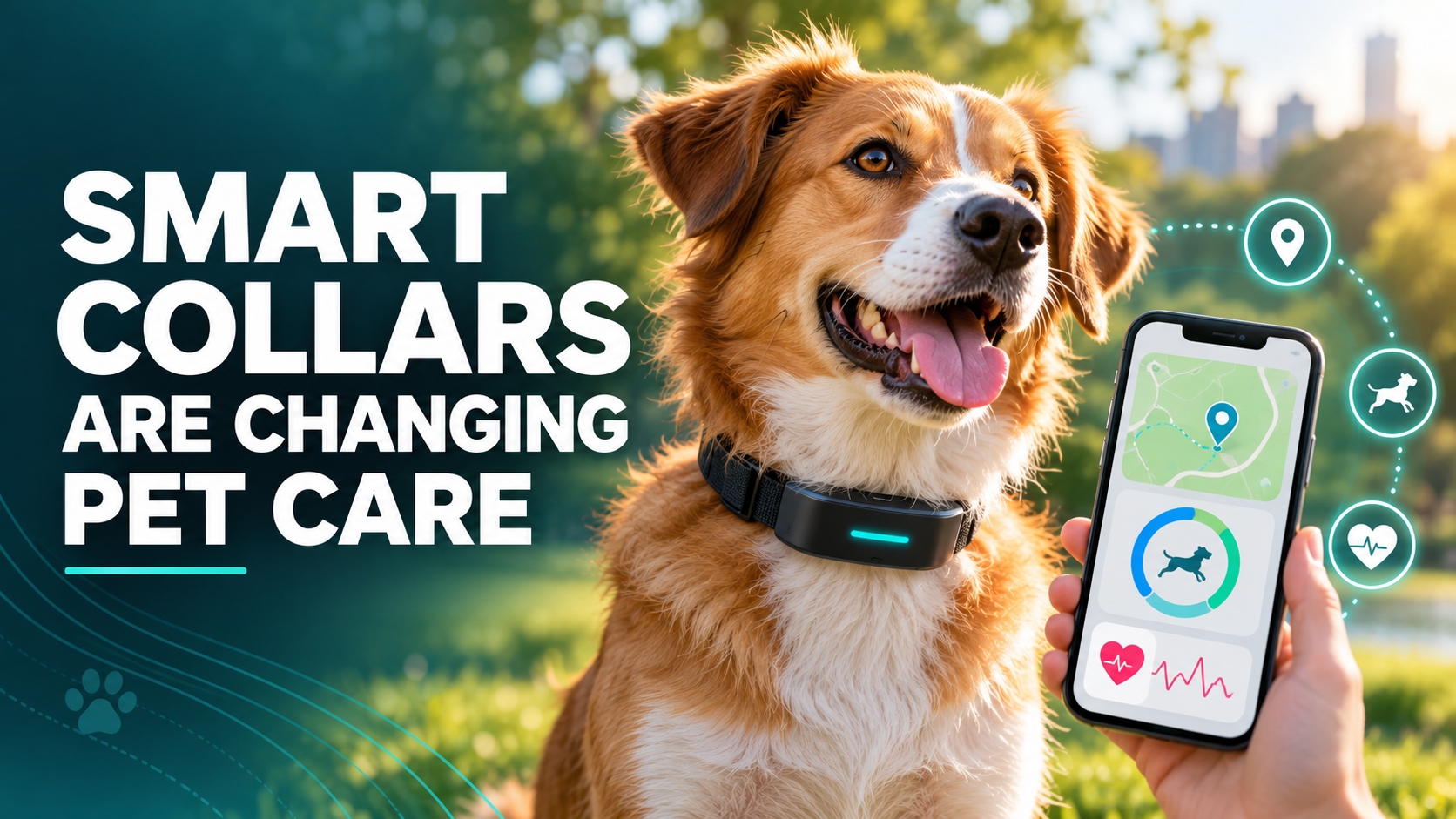
Pet collars are no longer limited to holding an identification tag. Today’s smart collars and collar-mounted trackers can help locate a missing dog, alert an owner when a pet leaves a safe zone, measure daily activity and reveal changes in sleep or behavior.
That does not make every smart collar a tiny veterinarian or a perfect safety net. The real revolution is simpler: pet parents now have more information, sooner, and can use it to make better everyday decisions.
What Is a Smart Pet Collar?
A smart collar is a wearable device that combines a traditional collar—or a small attachment for one—with digital technology. Depending on the model, it may use GPS, cellular service, Bluetooth, Wi-Fi, motion sensors or radio communication.
The term covers several different products. A lightweight activity tracker is not the same as a live GPS locator, and neither works exactly like a virtual-fence collar. Before shopping, decide which problem you actually want the device to solve.
| Type | Main purpose | Important limitation |
|---|---|---|
| GPS/LTE tracker | Remote location, escape alerts and location history | Usually needs cellular coverage and a subscription |
| Activity and wellness tracker | Measures movement, rest, sleep or behavior trends | Provides trends—not a medical diagnosis |
| GPS virtual fence | Creates app-based boundaries without buried wire | Requires training and does not form a physical barrier |
| Radio tracking system | Tracks dogs beyond cellular coverage | Often requires a separate handheld and costs more |
| Bluetooth item finder | Helps locate an item near compatible phones | Not the same as live cellular GPS tracking |
1. Faster Help When a Pet Goes Missing
Location tracking is the feature most likely to give pet parents immediate peace of mind. Many GPS collars let you create a virtual safe zone around your home. If your dog crosses that boundary, the app can send an escape alert and help you follow the dog’s updated location.
This can shorten the time between an escape and a search. Instead of waiting for a neighbor to call the number on a tag, an owner may know within minutes that a gate was left open.

However, “GPS” does not mean flawless, second-by-second tracking everywhere. Buildings, tree cover, terrain, weak cellular service and power-saving modes can affect accuracy or update frequency. A tracker should support—not replace—a visible ID tag, current microchip registration, secure fence and attentive supervision.
2. Activity Data Makes Daily Care More Visible
Dogs cannot tell us that they moved less this week or slept more than usual. A smart tracker can establish a daily baseline and make gradual changes easier to notice.
Depending on the device, an app may display active minutes, distance, rest, sleep and progress toward movement goals. This information can help owners adjust walks, playtime and feeding routines instead of relying only on memory.
The most useful question is not whether your dog reached an arbitrary number of steps. It is whether your dog’s normal pattern has changed. A sudden drop in activity, repeated restless nights or a new behavior trend may be worth discussing with a veterinarian—especially when it appears alongside symptoms such as limping, appetite loss, coughing or unusual fatigue.
3. Wellness Monitoring Can Reveal Trends Earlier
Some newer trackers go beyond movement and sleep. Compatible models may estimate resting heart rate, resting respiratory rate, scratching, barking or other behaviors by analyzing sensor data. These features can be useful as an early signal that something deserves attention.

The best use of wellness data is to add context. If an app flags a change, note when it began, what else changed at home and whether you see physical symptoms. That record can help you have a more focused conversation with your veterinarian.
4. Virtual Fences Offer More Flexible Boundaries
GPS fence collars allow owners to draw boundaries in an app rather than installing underground wire. This can be helpful on large properties, at vacation homes or in places where a physical fence is difficult to build.
Yet a virtual fence is not an invisible wall. It depends on GPS accuracy, a charged device and a dog that has been patiently trained to understand its warning cues. It also cannot keep wildlife, loose dogs or strangers out of the property.

For many households, a physical fence remains the safer primary barrier. A GPS boundary is best viewed as a specialized containment and training system, not permission to leave a dog outdoors unsupervised.
5. Shared Access Helps Families Coordinate Pet Care
Smart-collar apps can make it easier for several caregivers to stay informed. Depending on the platform, family members may be able to check a dog’s location, see whether a walk has already happened or respond to an escape alert.
This is especially helpful in busy households where one person feeds the dog, another handles the afternoon walk and a pet sitter helps on weekends. Shared information can reduce missed care and duplicate routines.
Owners should still review who has account access. Remove former sitters or household members who no longer need it, use a strong unique password and enable extra account protection when the service offers it.
6. Better Data Can Improve Veterinary Conversations
A veterinarian sees your pet for a short visit; you see the animal’s everyday routine. Smart-collar reports can help connect those two views. A timeline of activity, sleep or behavior changes may help you explain what has been happening between appointments.
Not every clinic will use every app report, and more data is not automatically better. Bring a short summary of the change, its timing and any related symptoms. The tracker’s job is to support observation—not overwhelm the visit with charts.
7. Smart Collars Are Becoming More Specialized
The market is moving away from one-size-fits-all devices. Everyday GPS trackers focus on escape alerts and long battery life. Wellness-focused devices emphasize activity and sleep. Rugged radio systems are built for hunting or working dogs in remote areas, while GPS fence systems focus on customizable boundaries.
This specialization is good for pet owners, but it also makes comparison more important. A collar can be excellent at one job and a poor choice for another.
What Smart Collars Still Cannot Do
- They cannot guarantee recovery. A device may lose power, detach or stop updating in poor coverage.
- They cannot diagnose illness. Wellness alerts are signals for closer observation or veterinary advice.
- They cannot replace training. Technology does not teach recall, leash manners or safe boundary behavior by itself.
- They cannot replace identification. Keep a readable tag and registered microchip as permanent backups.
- They cannot eliminate supervision. A virtual fence does not protect a pet from every outdoor danger.
The Hidden Costs: Plans, Charging and Privacy
Many nationwide GPS trackers contain their own cellular connection. That means the purchase price is only part of the cost; a monthly or annual plan is often required. Compare renewal pricing, minimum commitments, cancellation terms and multi-pet costs before buying.
Battery estimates also deserve a careful look. Live tracking, weak reception and frequent alerts can use considerably more power than normal home use. A tracker only helps when it is charged, attached securely and connected.
Finally, location and routine data are personal. Read the company’s privacy policy, check what information is shared with family members and review permissions when you connect the app to other services.
How to Choose the Right Smart Collar
- Name the main problem. Are you worried about escapes, exercise, health trends, containment or off-grid tracking?
- Check coverage. LTE trackers need compatible cellular service; remote areas may require a radio-based system.
- Measure your pet. Confirm neck size, minimum weight and total device weight—especially for small dogs and cats.
- Compare the full cost. Include hardware, subscription, replacement accessories and extra devices for multiple pets.
- Review real battery use. Look beyond the maximum advertised estimate and consider how often you will use live mode.
- Choose safe construction. Look for a secure fit, appropriate water resistance and a design that does not restrict movement.
- Understand the alerts. Know what the device measures and what an alert does—and does not—mean.
Are Smart Collars Worth It?
A smart collar can be worth the cost when its main feature matches a real need. An escape-prone dog may benefit from fast boundary alerts. A senior pet’s family may value long-term activity and sleep trends. A working dog in remote country may need radio tracking rather than an ordinary cellular device.
The wrong device becomes an expensive gadget. The right one becomes another layer of information and protection—alongside good veterinary care, identification, training and responsible supervision.
The Future of Connected Pet Care
Smart collars are likely to become smaller, more comfortable and better at recognizing an individual pet’s normal routine. Battery efficiency and sensor analysis should continue to improve, while apps may present clearer summaries instead of simply collecting more numbers.
The most meaningful progress will not be a collar that claims to do everything. It will be technology that gives pet parents useful information at the right time—and clearly explains its limits.
Frequently Asked Questions
Do smart collars work without Wi-Fi?
Many do, but the connection method matters. GPS/LTE trackers can send remote updates through a compatible cellular network. Radio-based trackers communicate with a dedicated handheld and may work where cell service is unavailable. Bluetooth-only finders depend on nearby compatible devices.
Can a smart collar tell if my pet is sick?
No consumer collar can diagnose illness. Some devices can flag changes in activity, sleep, scratching or estimated vital-sign trends. Those changes may justify closer observation or a call to your veterinarian.
Do all GPS pet collars require a subscription?
No, but most trackers that send location through a cellular network require a plan. Radio systems may avoid a monthly cellular fee but usually require a compatible handheld and have a higher upfront cost.
Is a smart collar a replacement for a microchip?
No. A microchip is a permanent form of identification that can be scanned if your pet is found. A smart collar can provide faster location information, but it may lose power or come off. Using both provides better protection.
Compare the 10 Best Smart Collars for Dogs in 2026
For more pet-tech ideas, read how smart collars can help during a lost-pet emergency and discover the best pet gadgets and practical pet-care hacks.
Editorial note: Product features, subscriptions and compatibility can change. Verify current details with the manufacturer before purchasing. Smart-collar data is not a substitute for professional veterinary advice, diagnosis or treatment.

wonderful